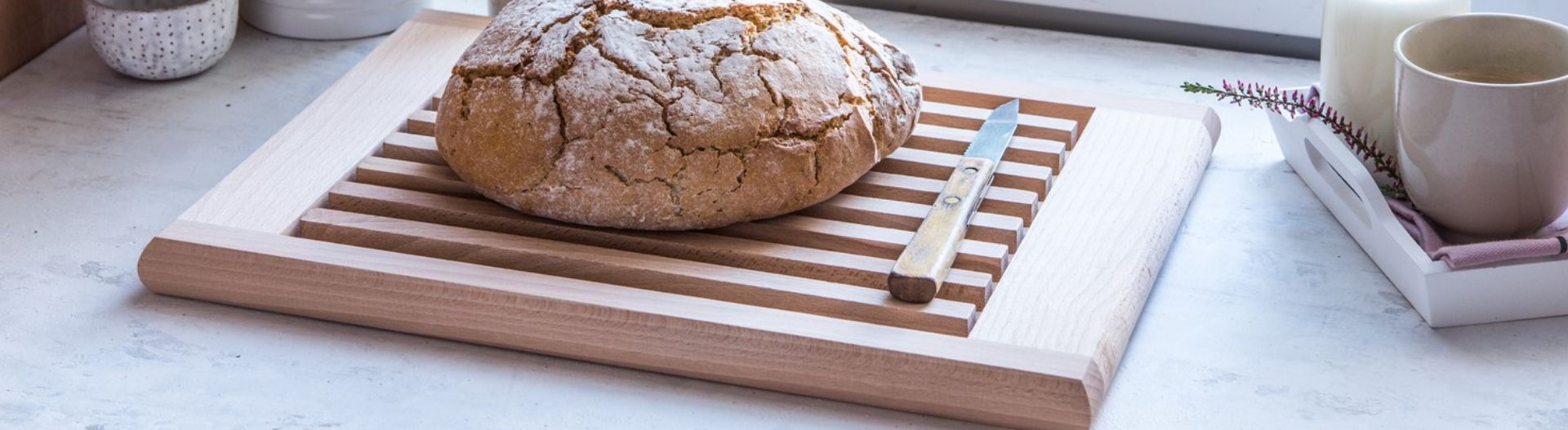
A bread cutting board is a fundamental kitchen accessory for preparing bread. A properly selected working surface allows precise slicing and reduces contact of crumbs with the countertop. Using a dedicated board improves workflow organization and protects kitchen surfaces from mechanical damage.
Wooden bread cutting boards – material properties
Wood is one of the most commonly used materials for bread cutting boards. A wooden board is characterized by high wear resistance and stability during use. The wood structure reduces excessive dulling of knife blades, which is important when slicing bread regularly.
The material properties also affect hygiene. Wood exhibits natural characteristics that limit microorganism growth when basic care guidelines are followed. Maintaining the board in good condition includes regular cleaning and periodic oiling of the surface.
Bread board construction – grooves and crumb collection system
Bread cutting boards are designed to improve work ergonomics. Models with grooves or channels allow controlled collection of crumbs in one place. This solution reduces countertop mess and makes it easier to maintain cleanliness.
In more advanced variants, construction elements are used to separate crumbs from the main working surface. These solutions are applied in heavily used kitchen environments.
Types of bread cutting boards and their applications
Selecting a bread cutting board should consider the intended use and operational requirements. Among the available options, the following can be distinguished:
classic models with simple construction
boards with crumb grooves
boards with crumb collection containers
boards equipped with carrying handles
The variety in construction allows the product to be adapted to work conditions and kitchen space organization.