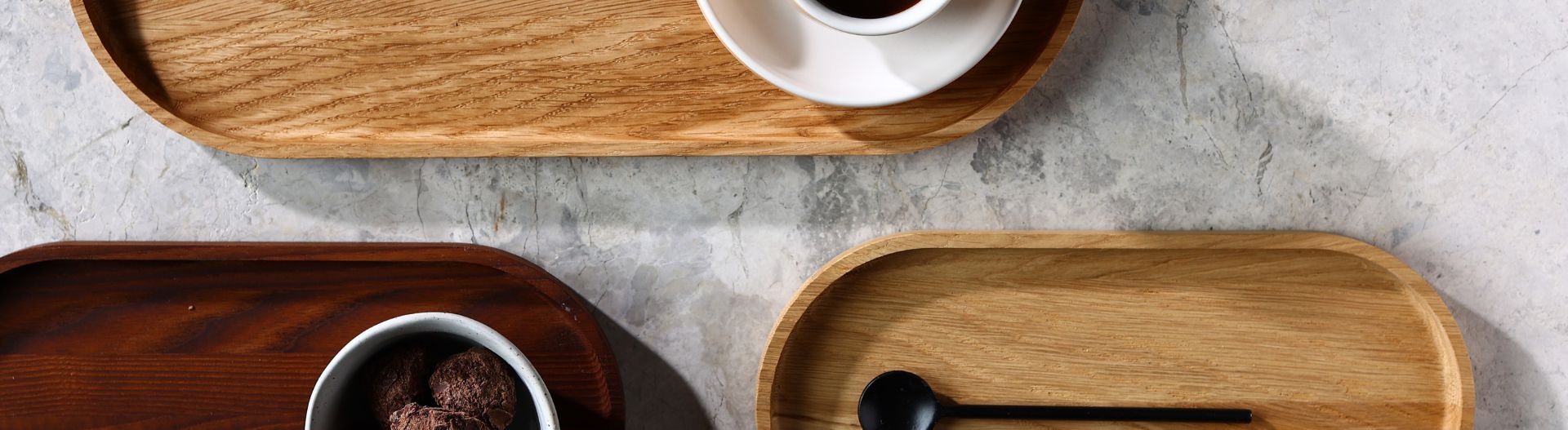
Decorative wooden trays – application in interior design
Decorative wooden trays are interior elements used for both functional and display purposes. They are suitable for serving drinks and meals, as well as a base for arranging decorations such as candles, plants, or seasonal elements. The use of wood introduces visual warmth and consistency with natural materials applied in interior design projects.
Wooden trays – material properties and durability
A decorative tray made of solid wood, particularly oak or beech, is characterized by high resistance to wear under daily use conditions. The material ensures structural stability and consistency of performance parameters.
Key product features:
• manual processing of high-quality wood
• natural grain pattern and varied coloration
• resistance to loads and abrasion
• compatibility with various interior design styles
Decorative trays – forms and functional fit
The choice of tray shape affects both usage and arrangement possibilities. In practice, two main construction variants are used.
A round decorative wooden tray is used on tables, countertops, and dressers, enabling organized display of decorative elements.
A rectangular decorative tray is used in serving processes and for organizing larger usable surfaces.
Both solutions support space organization and improve ergonomics of use.
Loft-style decorative trays are based on simple forms and limited surface processing. These variants often combine wood with metal elements or use raw finishes, aligning with the principles of industrial design.
Wooden trays – role in space organization
The use of decorative trays supports organizing usable space without the need to modify the interior layout. Products of this type enable grouping of items and their clear presentation, which is applicable in both residential and commercial spaces.