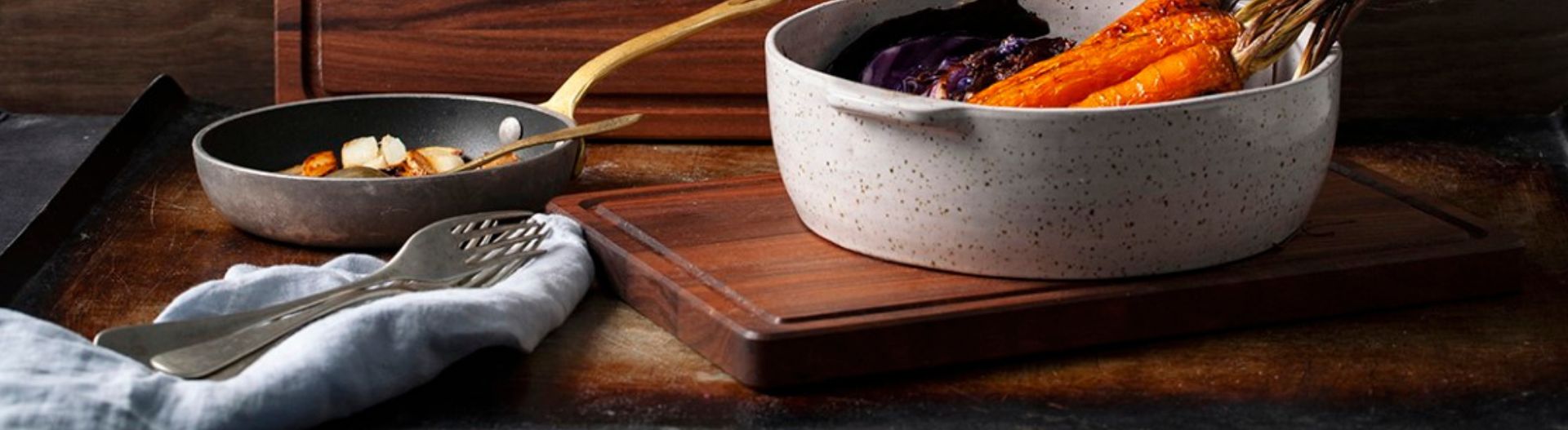
Dark wood boards – application in kitchen equipment
Dark wood boards are a component of kitchen equipment that combines functional properties with the aesthetics of the material. They are characterized by high material density, which translates into wear resistance and stability during use. The dark coloration of the wood is achieved naturally or through processing, allowing the product to be matched to various types of kitchen layouts.
Durability and performance characteristics
Cutting boards made from dark wood are characterized by increased resistance to mechanical damage and reduced moisture absorption. A properly prepared working surface lowers the risk of deformation and cracking.
In practice, this means:
stable support during cutting
lower risk of deep scratches
longer product lifespan under intensive use
Bread boards made from dark wood
Boards intended for bread are often equipped with grooves or a crumb collection system. This solution improves workflow organization and reduces countertop mess.
Dark wood effectively masks signs of wear, which is important in high-use environments such as food service or kitchen back-of-house areas.
Serving and presentation function
Dark wood boards are used not only for food preparation. They are also utilized as a serving element for snacks, bread, or ready-made dishes.
The uniform structure and distinct wood grain enhance presentation aesthetics, which is important in food service venues and in spaces with elevated visual standards.
Construction and technical details
Depending on their intended use, the boards may be equipped with additional structural elements such as:
milled handles
juice or crumb grooves
thickened edges to increase stability
The selection of appropriate thickness and wood type affects resistance to deformation and working comfort.
Dark wood boards in professional applications
In B2B environments, dark wood boards are used in restaurant kitchens, catering operations, and the hospitality sector. Key factors include consistent quality, dimensional stability, and ease of maintenance.
Regular impregnation with wood oil limits moisture absorption and helps maintain the working surface in good condition over time.